The Quality Control Checklist We Use on Every Shipment
Inside the multi-stage QC process FusenLink Global runs before any container leaves the port — what we check, when, and why it matters.
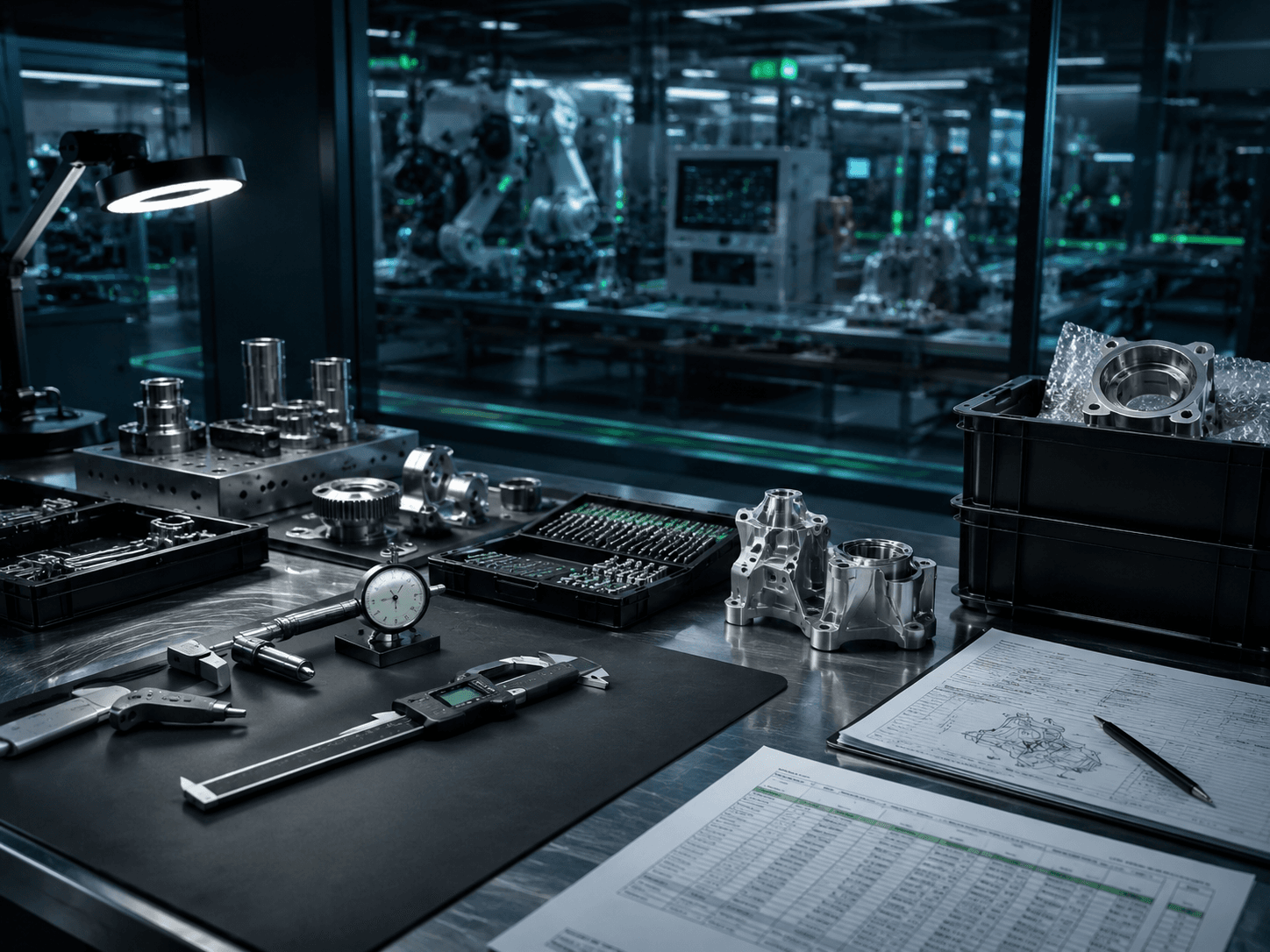
Quality control is not one step at the end of production — it is four steps, each catching a different category of issue. Skipping any one of them is the most common way defects slip into a container. Here is the framework we run on projects where the buyer wants real follow-up, not just a stamped certificate.
Stage 1 is supplier qualification, before any order is placed. We confirm the legal entity, factory ownership versus trader status, capacity match against the proposed order size, and export history into the buyer's destination market. Where ISO 9001, IATF 16949 or other quality systems apply, we coordinate with qualified suppliers that hold them and verify the certificate is current. Overclaiming certifications is the single most common red flag.
Stage 2 is incoming materials QC. The raw inputs the factory uses — resin, fabric, metal stock, electronic components — are inspected against the approved sample and BOM. This stage catches substituted components and grade swaps before they get built into finished goods, where they are far more expensive to fix.
Stage 3 is in-process inspection, starting with the first article off the line. The first article is checked dimensionally and visually against the approved sample, then production is sampled at agreed intervals. The earlier a defect is found, the cheaper it is to fix — a process issue caught at 5 percent completion costs almost nothing; the same issue caught at 80 percent costs the whole shift.
Stage 4 is pre-shipment inspection (PSI), the AQL-based sample check typically run at 80 percent production completion. This is what most buyers think of when they hear 'inspection,' but on its own it is not enough. PSI confirms the average outgoing quality is within agreed limits; it does not catch issues that affect only the first or last lot, and it does not validate packaging integrity or labeling.
Stage 5 is loading supervision. Container condition, packaging integrity, labeling, quantity and sealing are verified at the moment the goods are stuffed into the container. This closes the gap between factory floor and your warehouse, where damage and counting errors are surprisingly common.
Documentation is the deliverable. A serious QC pass produces: a supplier qualification record, sample approval notes, first-article report, in-process check log, PSI report with photographs and measurements, packaging and labeling check, supplier certificates where applicable, and a corrective-action communication trail if any issues came up. We assemble these into one document package per shipment so the buyer has an audit trail.
AQL-based or 100% inspection is a project-by-project decision. For low-risk repeat orders from a qualified supplier, AQL 2.5 is usually sufficient. For new suppliers, safety-critical products, or shipments with a history of issues, tighter AQL or 100% inspection of critical-to-quality features is the safer choice. The buyer should decide based on the cost of a field failure, not just inspection cost.
One last note: QC is a conversation, not a court. When something fails, the workflow we follow is contain, root-cause, correct, prevent — not blame. The factories that respond well to that workflow are the ones worth keeping in the supplier base.