OEM vs ODM: Which Manufacturing Model Fits Your Brand?
Understand the practical difference between OEM and ODM, when to pick each, and how to structure a long-term manufacturing partnership.
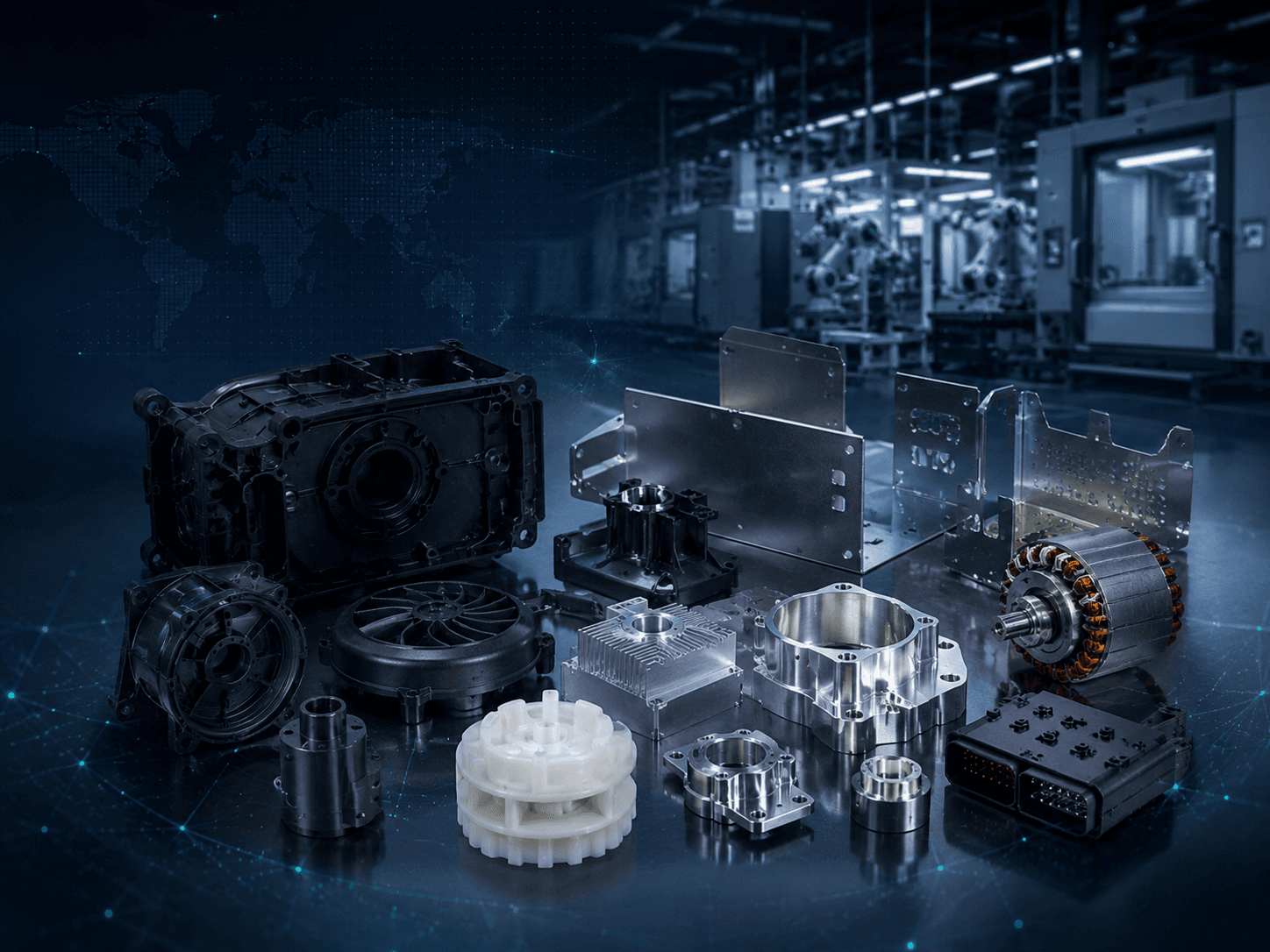
OEM and ODM both produce branded product from a Chinese factory, but they answer very different questions about who owns the design. Understanding that distinction up front saves time, money and a lot of awkward IP conversations later.
OEM — Original Equipment Manufacturing — means the factory builds to your design and your specification. You provide the drawings, the BOM, the tolerances, the test standards and the brand identity. You own the IP, the tooling, and the resulting product family. The factory is a contracted producer. OEM is the right choice when product differentiation is part of your competitive moat and when you have the engineering capacity (in-house or via a partner) to maintain the design.
ODM — Original Design Manufacturing — means the factory already has a working design, often with proven tooling and supply chain, and you rebrand and lightly customize it. You're paying for the factory's existing development cost amortized across many buyers. ODM lowers the up-front investment, shortens time to market, and is well-suited to proven categories where the technology is mature and differentiation is mostly in branding and distribution.
Cost behaves differently in each model. OEM front-loads cost into tooling, sampling and qualification; unit cost can be very competitive once volumes ramp. ODM has near-zero tooling cost to the buyer, but unit cost embeds a margin for the factory's design ownership, and that margin doesn't go down as quickly with volume.
Timeline is a real differentiator. ODM projects can move from quote to first shipment in a fraction of the time an OEM development takes, because the factory already has design files, working samples and a validated process. OEM projects need spec review, DFM feedback, tooling, sampling, sample approval, pilot run and pre-production — every one of those steps has its own calendar.
Many of the buyers we work with start in ODM to validate demand, learn the category, and build distribution. Once volumes and product roadmap justify it, they move to OEM for their hero SKUs while keeping ODM for long-tail or seasonal products. That hybrid pattern is common and usually healthier than committing to either extreme on day one.
Whatever the model, the contract is what makes the relationship sustainable. Clear specs, IP and exclusivity clauses, sample-approval language, agreed quality protocols, defect-handling rules, and a written framework for changes turn a one-off purchase into a supply relationship. ODM in particular needs careful language around exclusivity, color/finish customization, and design ownership — otherwise your 'unique' product can quietly be shipped to a competitor with a different label.
If you're not sure which fits, the diagnostic question is usually: would a buyer notice the difference between your product and the factory's standard ODM offering with the logo removed? If yes, you need OEM. If no, ODM is the faster, cheaper and entirely valid path.